
Ingredients
Cook Profile
Equipment
About This Recipe
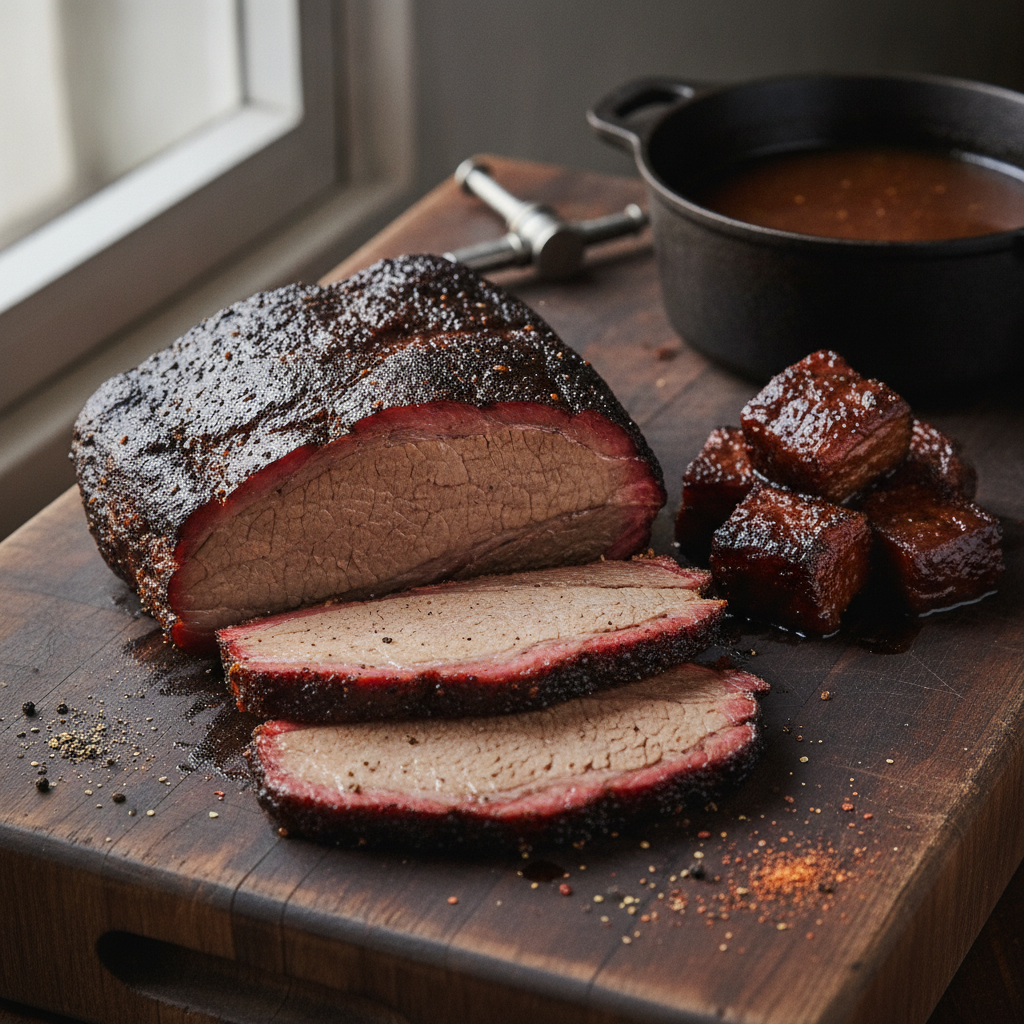
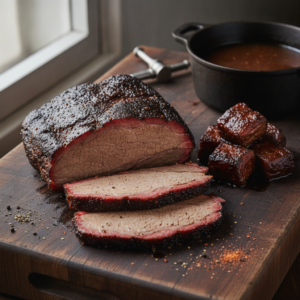
This is the real deal, a whole packer brisket cooked low and slow until it hits that perfect wobble. We're talking a proper trim, an optional broth injection for extra juiciness, a simple salt-and-rub seasoning, and a long ride in the smoke with the Texas Crutch to push through the stall. Rest it right in a faux cambro, slice it against the grain, and you've got competition-caliber brisket in your own backyard.
Instructions
Trim the brisket down to about a 1/4-inch fat cap and clean off the silverskin on the meat side. Don't toss the trimmings, freeze some for burger grind or render it down for basting fat. If you're chasing burnt ends, save extra point fat for that too.
If you want to cook the point and flat separately for burnt ends, this is the time to separate them at the fat seam. Otherwise, leave the brisket whole and cook it as one piece.
For extra insurance against dryness, inject about 1 ounce of beef broth per pound of raw brisket. Run the needle parallel to the grain in several spots about an inch apart, backing out slowly as you push the plunger. Do this over the sink, it gets messy.
Season the brisket. If you injected, skip the salt. If not, sprinkle on 1/2 teaspoon of kosher salt per pound evenly across the surface 12-24 hours ahead of time (or at minimum 2-4 hours before smoking). Note which way the grain runs so slicing is easy later. Follow the salt with a heavy coat of Big Bad Beef Rub, working it into the meat. Keep the brisket chilled until it's ready for the smoker, cold meat pulls in more smoke.
Fire up your smoker and stabilize the temp around 235°F. It'll dip once you load in cold meat and open the lid, settling into our target cooking zone of 225°F.
Load the brisket onto the smoker, fat side up, positioned over the water pan if your rig has one. Insert your probe into the thickest part of the flat, farthest from the heat. Add about 4 ounces of wood right away, then another 4 ounces over the next couple hours as the smoke tapers off. Keep that water pan topped off.
Let the brisket ride undisturbed, no mopping, no spritzing, none of that. It just cools the surface and softens your bark. Flip once around the 3-hour mark only if one side is noticeably darker than the other.
Once the internal temp climbs into the 150-170°F range and stalls out, pull the brisket and wrap it tight in a double layer of heavy-duty foil, the Texas Crutch. Crimp it well; loose wrapping lets juice escape. Return it to the smoker (or move to a 225°F oven) and keep pushing toward 203°F internal.
Start checking for doneness once you hit 195°F internal. A probe should slide in with almost no resistance, and the brisket should jiggle like jelly when you nudge it. That sweet spot usually lands right around 203°F.
Optional but worth it: render 1/4 pound of reserved beef fat in a pan, cube the point into 1/2 to 3/4-inch pieces, and fry until crispy on the outside. Drain the fat, toss the cubes with 1/4 cup BBQ sauce and 1/4 cup of the foil drippings, then set the pan on the smoker to simmer down into sticky, caramelized burnt ends.
Rest the wrapped brisket in a faux cambro, a towel-lined cooler works great, for 1 to 4 hours. Don't slice until the internal temp drops to around 150°F if you can hold out that long.
Slice against the grain, separating the point and flat at the fat seam first since the grain runs differently in each muscle. Trim excess fat between them before cutting clean 1/4-inch slices. Serve straight up, on Texas toast, or piled into a sandwich, brisket dries out fast once cut, so slice only what you're serving right away.
Recipe Photos

Comments
Log in to leave a comment.